
Wiring, Pre-Wiring & Low-Voltage Infrastructure
Can In-Wall and In-Ceiling Speakers Be Installed Where I Want Them?
Sometimes yes, sometimes not exactly, and the answer should be discovered before speakers are ordered, walls are patched, or a room design is finalized.
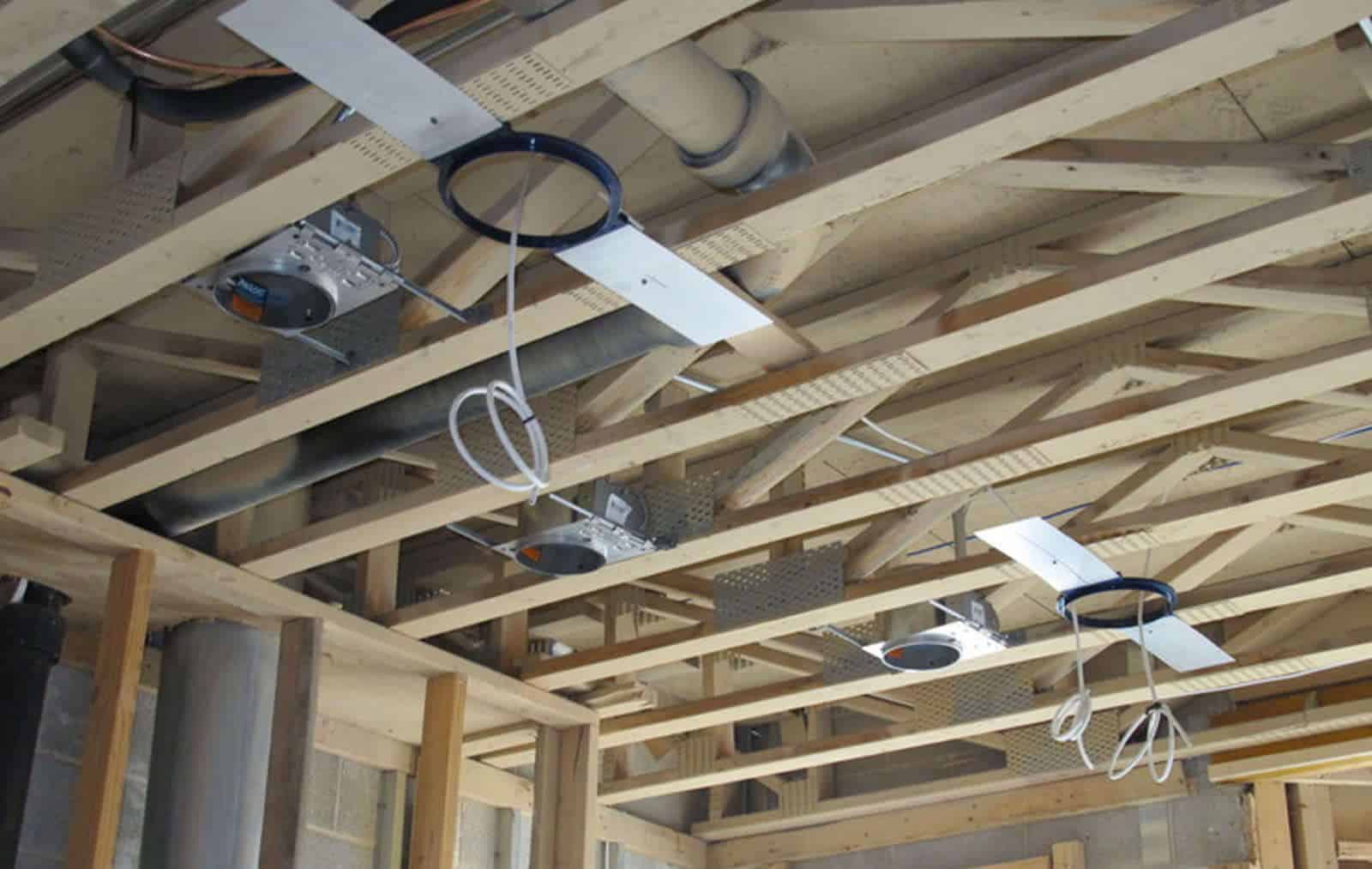
Quick Answer
The desired speaker location has to pass three tests: acoustic, physical, and wiring.
The acoustic test asks whether the location will actually sound right. The physical test asks whether the speaker fits in the wall or ceiling without hitting studs, joists, ducts, pipes, electrical, insulation, fire blocks, exterior walls, or other obstructions. The wiring test asks whether proper speaker cable can be routed safely and cleanly to the amplifier or equipment location.
Many architectural speakers need several inches of mounting depth, but the exact requirement varies by model. Some shallow in-wall products are designed for standard stud bays; larger in-ceiling speakers, in-wall subwoofers, back boxes, and high-output theater models may need more depth. A professional installation should verify the cavity before cutting and should use in-wall-rated cable such as CL2 or CL3 where applicable.
Feasibility First
Every architectural speaker location needs to pass three tests.
1. Acoustic test
Will this location support the listening goal? A speaker can physically fit and still be wrong if it is too far from the screen, too close to a corner, too high for dialogue, or aimed away from the seating area.
2. Physical test
Will the speaker fit safely in the cavity? The install team must consider depth, cutout size, framing, joists, pipes, ducts, electrical, insulation, fire blocks, and the finished surface.
3. Wiring test
Can the right cable get from the equipment location to the speaker without unsafe shortcuts, visible wire, unnecessary drywall damage, or service headaches later?
Depth and Clearance
Mounting depth varies more than homeowners expect.
A simple round in-ceiling speaker may have a very different mounting depth than a high-output in-ceiling LCR, an in-wall subwoofer, an invisible speaker, or a small-aperture architectural speaker with a back box. Some products are designed specifically for shallow cavities. Others need deeper framing, open attic access, or construction coordination.
As a planning conversation, many wall and ceiling installations start by asking whether there is roughly 3.5 inches, 5 inches, 6 inches, or more of usable space, but those are not universal rules. The actual speaker’s spec sheet controls the design. The cutout diameter or rectangle matters too, because a speaker may be deep enough but too wide for the available framing bay.
Do not buy from depth guesses
Before committing to a speaker location, verify mounting depth, cutout size, obstruction clearance, grille size, back-box requirements, and service access against the exact model being installed.
Behind the Drywall
The open bay you want may not actually be open.
Walls and ceilings often hide the things that determine whether an installation is simple or complicated. Studs, joists, blocking, plumbing, electrical, HVAC, recessed lights, sprinkler lines, ductwork, steel beams, masonry, insulation, and pocket door hardware can all change the final speaker layout.
Exterior walls can be especially tricky because insulation, vapor barriers, masonry, or limited cavity depth may restrict placement. Ceilings can be complicated by joist direction, ductwork, lights, ceiling fans, and rooms above. In condos and multi-family buildings, shared walls, fire ratings, HOA rules, and access limitations may also matter.
Common obstacles and what they mean
| Obstacle | Why it matters | Possible solution |
|---|---|---|
| Stud or joist | Blocks the cutout or prevents the speaker from fitting. | Shift location, use a different speaker shape, revise layout, or address during construction. |
| HVAC duct | Blocks depth and may create vibration/noise issues. | Relocate speaker, choose a shallow model, or revise room layout. |
| Electrical wiring | Creates safety and interference concerns if low-voltage and power are routed poorly. | Use proper separation, routing, and code-compliant methods; coordinate with electrician when needed. |
| Plumbing | Creates risk and may make the cavity unusable. | Avoid the bay and redesign before cutting. |
| Fire blocking | Prevents wire fishing and can restrict vertical cable paths. | Use alternate route, open controlled access, or plan during remodel/new construction. |
| Insulation / exterior wall | Affects depth, fit, sound transfer, and building-envelope considerations. | Use appropriate back box, alternate location, or select surface/on-wall speaker if better. |
| Lighting and ceiling design | Speakers may conflict visually or physically with recessed lights, pendants, fans, or trim. | Coordinate speaker layout with lighting plan before drywall and finish work. |
Wire Routing
The speaker is visible for a moment. The wiring matters for years.
Most architectural speakers are passive. They need speaker cable from an amplifier, AV receiver, distributed audio amp, or rack. The wire should be the right gauge for the run length and speaker load, rated for the installation location, labeled, documented, and routed so future service is possible.
In-wall speaker cable is commonly specified with ratings such as CL2 or CL3 for concealed low-voltage applications. In some commercial or plenum environments, additional rating requirements may apply. Local code and project conditions should always be followed.
Good wiring practice
- Use properly rated in-wall speaker cable.
- Choose gauge based on distance, impedance, and power needs.
- Label both ends of every run.
- Keep service loops where appropriate.
- Avoid running speaker cable tightly parallel to electrical wiring.
- Document all speaker locations and wire paths.
- Plan conduit or spare wiring where future upgrades are likely.
Questions to answer
- Where will the amplifier or rack live?
- Can the rack breathe and be serviced?
- Is the room new construction, remodel, or finished retrofit?
- Will zones need independent volume control?
- Will this speaker ever become part of a theater upgrade?
- Do we need back boxes to reduce sound transfer?
- Do we need outdoor, damp, or marine-rated products?
Project Timing
New construction and remodels are the best time to plan architectural speakers.
When walls and ceilings are open, the system can be planned with far fewer compromises. Speaker wire, network cable, rack pathways, conduit, power coordination, keypad locations, touchscreens, access points, shades, cameras, and future AV paths can all be addressed before drywall closes.
Retrofit projects can still be excellent, but they need more investigation. The installation may require attic or basement access, strategic openings, wire fishing, patching, or revised speaker locations. A good retrofit plan is honest about what can be done cleanly and what would create unnecessary damage or cost.
New construction / major remodel
Best opportunity for brackets, back boxes, conduit, labeled home runs, rack planning, lighting coordination, and future-proofing.
Finished-home retrofit
Requires careful discovery, realistic placement choices, clean wire paths, controlled access points, and sometimes a hybrid of in-wall, in-ceiling, on-wall, or hidden solutions.
When the First Location Fails
A “no” in one location does not mean the room cannot have great audio.
If the ideal in-wall or in-ceiling location is blocked, the system can often be redesigned. The right alternative depends on whether the obstacle is acoustic, structural, visual, or budget-related.
Shift the location
Small adjustments may preserve the layout while avoiding a joist, duct, or light.
Change the speaker type
A shallow model, angled model, rectangular in-wall, small-aperture speaker, or on-wall speaker may solve the problem.
Revise the zone
In whole-home audio, adding speakers or splitting zones may improve coverage more than forcing one pair into the wrong place.
Plan construction support
During remodels, brackets, blocking, back boxes, conduit, or framing coordination may make the ideal design possible.
How Davis Checks Feasibility
We combine design intent with jobsite reality.
Davis Audio & Video starts with what the system should do: the rooms, listening positions, speaker roles, zones, sources, control interface, and budget. Then the installation plan is checked against the building. Depending on the project, that may include reviewing plans, locating studs and joists, checking attic or basement access, inspecting existing wiring, using exploratory openings when appropriate, and coordinating with builders, designers, electricians, or drywall teams.
The goal is to avoid surprises. A homeowner should not find out after buying equipment that a beam, duct, or wire path prevents the desired layout. The most professional speaker installation is often the one where the hard questions are answered before installation day.
FAQ
Installation feasibility questions
How much depth do in-wall speakers need?
It varies by model. Some shallow architectural speakers are designed for standard stud bays, while larger in-wall LCR speakers, in-wall subwoofers, back boxes, and high-output models may need more depth. The exact spec should be confirmed before cutting.
Can in-ceiling speakers be installed between joists?
Often yes, but the joist spacing, joist direction, speaker cutout size, mounting depth, lights, ducts, pipes, and room layout all matter. A feasibility check should confirm the exact location.
Do I need special speaker wire inside walls?
In-wall speaker cable should be rated for the application, commonly CL2 or CL3 in many residential low-voltage installations. Project conditions and local code should always be followed.
Can Davis install speakers in a finished home?
Yes, many architectural speaker projects are retrofits. The exact approach depends on access, wire paths, wall and ceiling construction, desired speaker locations, and how much patching or finish work the project allows.
Should I pre-wire for speakers during construction even if I am not ready to buy equipment?
Often yes. Speaker wire, conduit, rack locations, access points, and control wiring are much easier to plan before walls close. Equipment can often be added later if the infrastructure is in place.
We offer a free consultation
Before you cut drywall, confirm the speaker can actually work there.
Davis Audio & Video can evaluate placement, wiring, construction access, and product fit for in-wall and in-ceiling speaker projects.