Davis Audio & Video Resource Guide
Remodel Smart Home Technology Guide
A remodel is one of the best opportunities to make a home easier to use. When walls, ceilings, cabinetry, lighting, or outdoor areas are already being changed, smart home technology can be integrated cleanly instead of added later as visible devices and exposed compromises. This guide helps homeowners understand what to plan before construction begins.
Guide Section
Why Technology Should Be Part of the Remodel Plan
Many remodels focus on finishes first: cabinets, tile, flooring, fixtures, paint, and furniture. Those details matter, but technology planning should happen before the walls and ceilings are closed. Audio, video, network wiring, lighting control, shade wiring, cameras, and equipment locations all interact with construction decisions.
Adding technology after the remodel is complete can create unnecessary holes, visible wire, limited speaker placement, weak WiFi, poorly located controls, or equipment squeezed into cabinets without ventilation. Planning early protects the design investment.
For a luxury remodel, Davis positions technology as part of the architecture and daily function of the home. The goal is to make the finished space more beautiful, more comfortable, and easier to use.
Guide Section
Evaluate the Existing Infrastructure
Every remodel should begin with an assessment of the existing wiring, network, AV equipment, lighting controls, speaker locations, TVs, service provider equipment, and rack or cabinet organization. Older homes may have outdated coax, limited Ethernet, weak WiFi, unlabeled cables, or equipment scattered throughout the house.
The assessment should identify what can stay, what should be replaced, what can be upgraded, and what infrastructure is missing. It should also look for hidden risks such as poor ventilation, overloaded cabinets, unreliable power, and old control systems that no longer support modern sources.
This step is important because it prevents the remodel from building new finishes around outdated technology.
Guide Section
Smart Home Upgrades to Consider During a Remodel
Common remodel technology upgrades include lighting control, motorized shades, hidden speakers, whole-home audio zones, TV/display locations, media room upgrades, home theater wiring, WiFi access points, security cameras, door stations, networking equipment, and centralized control.
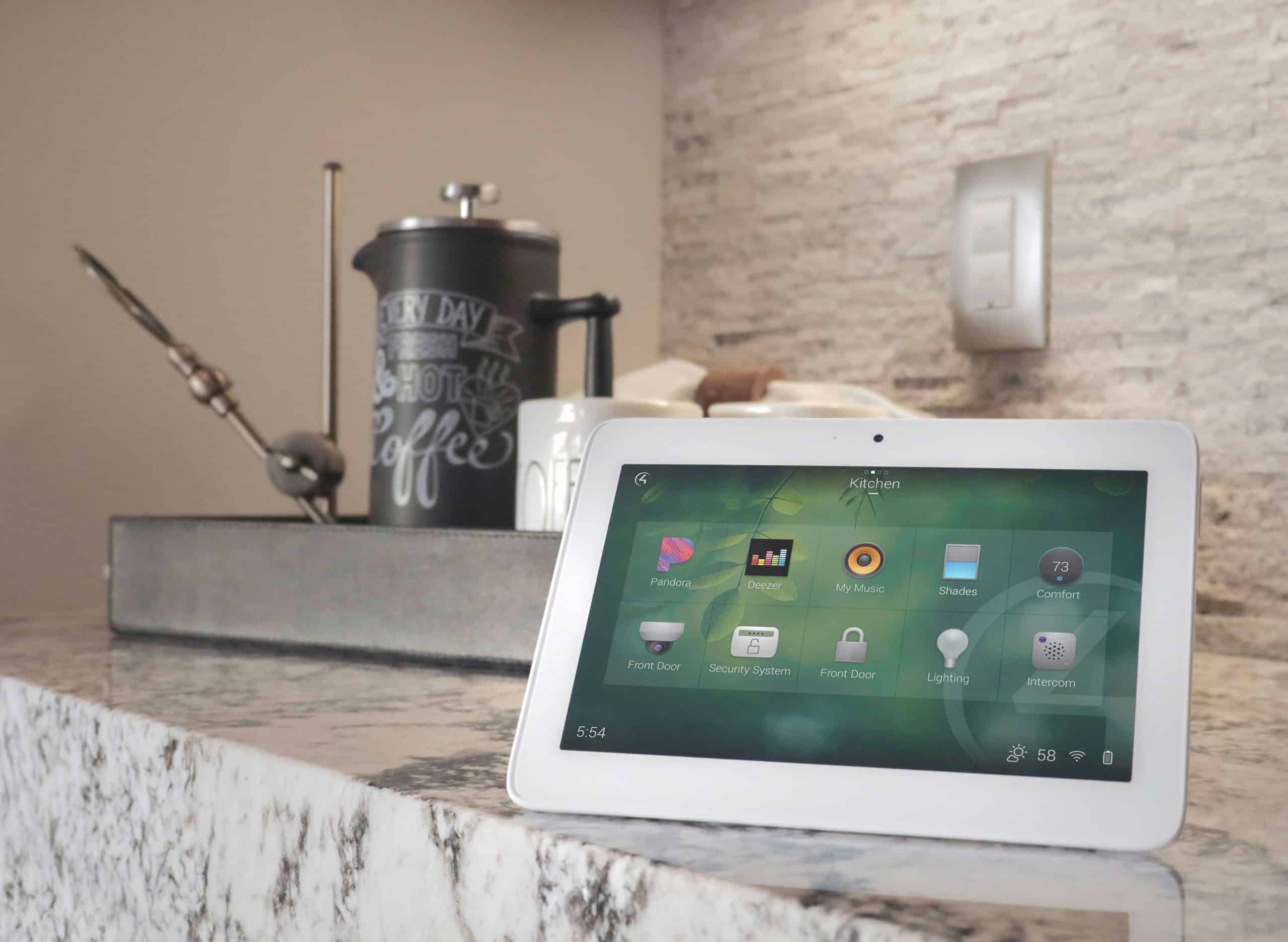
Kitchen remodels are ideal for audio, lighting scenes, shade control, discreet TV planning, under-cabinet lighting integration, and keypad simplification. Basement remodels can support theaters, media rooms, golf simulators, gaming areas, bars, and multi-zone audio. Primary suite remodels are ideal for shades, soft lighting, audio, TV, and Goodnight scenes.
Outdoor remodels should include audio, video, lighting, WiFi, cameras, gate/door access, and conduit before patios, decks, landscaping, or hardscape are finished.
Guide Section
Design-Friendly Technology Choices
The best remodel technology does not fight the design. Speakers can be hidden or aligned with lighting. TVs can be recessed, framed, motorized, or placed with attention to sightlines. Keypads can reduce wall clutter. Shades can be planned with pockets or discreet mounts. Equipment can be relocated to a rack rather than occupying furniture space.
Coordination with the interior designer is essential. Fabric selections, wall coverings, ceiling details, millwork, art placement, and furniture plans all affect audio, video, lighting, and control decisions.
Technology should feel intentional, not added at the end.
Guide Section
Phasing and Budget Strategy
A remodel often has budget pressure, so the system can be phased. The most important rule is to install infrastructure while access is available. Even if certain speakers, shades, cameras, or displays are deferred, the wiring and pathways should be prepared during construction.
Prioritize items that are difficult to add later: structured wiring, access point locations, speaker wire, shade power, theater conduit, outdoor conduit, camera cabling, and rack location. Equipment can often be added later if the infrastructure is in place.
A professional integrator can create a must-do-now list and a phase-two list so the homeowner gets immediate functionality without sacrificing future options.
Guide Section
Handoff, Training, and Support After the Remodel
At the end of a remodel, the homeowner should not be left with a beautiful new space and confusing controls. The system should be programmed, labeled, tested, and explained. Scenes should match the way the homeowner uses the space.
The handoff should include app setup, remote training, keypad explanation, source testing, WiFi verification, camera access, and documentation. Service support is especially important because remodel projects often involve multiple trades and changes after move-in.
Davis emphasizes not only installation, but long-term usability and support.
Examples
Helpful Examples
Kitchen Remodel
Lighting scenes, hidden speakers, shade integration, stronger WiFi, a simplified keypad, and a discreet TV/audio plan.
Basement Remodel
Media room or theater wiring, surround sound, bar audio, gaming sources, lighting scenes, rack planning, and acoustic considerations.
Outdoor Remodel
Patio speakers, outdoor TV, WiFi access point, landscape lighting integration, camera coverage, and conduit before hardscape.
FAQ
Frequently Asked Questions
When should I plan smart home technology during a remodel?
As early as possible, ideally before demolition or rough-in decisions are finalized. This allows wiring, lighting, shades, speakers, and controls to be coordinated with construction.
Can old wiring be reused?
Sometimes, but it should be tested and evaluated. Older wiring may not support modern bandwidth, speaker layouts, camera locations, or control requirements.
What should I do if I cannot afford everything now?
Install the infrastructure during the remodel and phase equipment later. Wiring and conduit are much easier to add while walls and ceilings are open.
Can technology be hidden?
Yes. Speakers, wiring, equipment, shades, and controls can often be integrated discreetly when planned early with the design team.
Do remodel projects need service plans?
A service plan is helpful because systems may need updates, adjustments, troubleshooting, and support after construction and move-in.
Plan Your System With Davis Audio & Video
Davis Audio & Video can help turn your remodel into a smarter, cleaner, more reliable home technology upgrade. Schedule a consultation before construction decisions are locked in.