Davis Audio & Video Resource Guide
Whole-Home Audio Guide
Whole-home audio is one of the most enjoyable smart home upgrades because it changes the feel of the house every day. Done correctly, it is not about blasting music everywhere. It is about designing zones that match the way the family lives: soft music in the kitchen during the morning, a playlist on the patio during dinner, clear audio in the gym, background music for entertaining, and independent control for bedrooms or offices.
Guide Section
What Whole-Home Audio Includes
A whole-home audio system distributes music to multiple rooms or outdoor spaces from centralized equipment, local sources, streaming services, or integrated control platforms. Each listening area is usually called a zone. A zone may be a single room, a group of rooms, a patio, a pool area, a gym, or a primary suite.
The most successful systems are designed around lifestyle. A family may want kitchen and breakfast nook audio grouped for mornings, great room and dining room audio for entertaining, patio and pool audio for weekends, and independent bedroom zones for private listening. The design should map to how people move through the home.
A luxury system should feel invisible when possible. Speakers can be in-ceiling, in-wall, architectural, landscape, surface-mounted, hidden, or designed as performance statement pieces. The right choice depends on sound quality expectations, ceiling height, room design, outdoor conditions, and how visible the homeowner wants the technology to be.
Guide Section
Designing Zones the Right Way
Zone planning is the most important part of whole-home audio. A poorly planned system may force unrelated rooms to play the same music at the same volume or make it difficult to isolate spaces when family members want different content. A good zone plan allows the home to feel flexible.
Common zones include kitchen, great room, dining room, primary bedroom, primary bath, home office, gym, theater, basement, guest suite, patio, pool, outdoor kitchen, and garage. In large homes, hallways and transitional spaces may also need audio so music does not disappear when guests move from room to room.
Volume should be easy to control by room. Some zones need detailed listening quality, while others only need background coverage. Davis can help homeowners decide where premium speakers matter most and where discreet background audio is the better investment.
Guide Section
Speaker Selection and Placement
Speaker selection is both a performance and design decision. In-ceiling speakers are clean and discreet, but they must be placed correctly for coverage and stereo imaging. In-wall speakers can improve front soundstage performance in media spaces. Invisible speakers may be ideal for design-forward rooms where grilles are not acceptable. Outdoor speakers must withstand weather while providing even coverage without disturbing neighbors.
Placement matters. Two speakers installed too close together may not cover the room properly. Speakers installed too far apart may create uneven listening. In outdoor areas, one or two loud speakers are often worse than multiple well-placed speakers playing at lower volume. This creates a more luxurious sound field and keeps the system comfortable for conversation.
A professional design considers ceiling height, seating areas, reflective surfaces, open floor plans, furniture placement, landscaping, water features, and the intended volume level.
Guide Section
Streaming, Sources, and Control
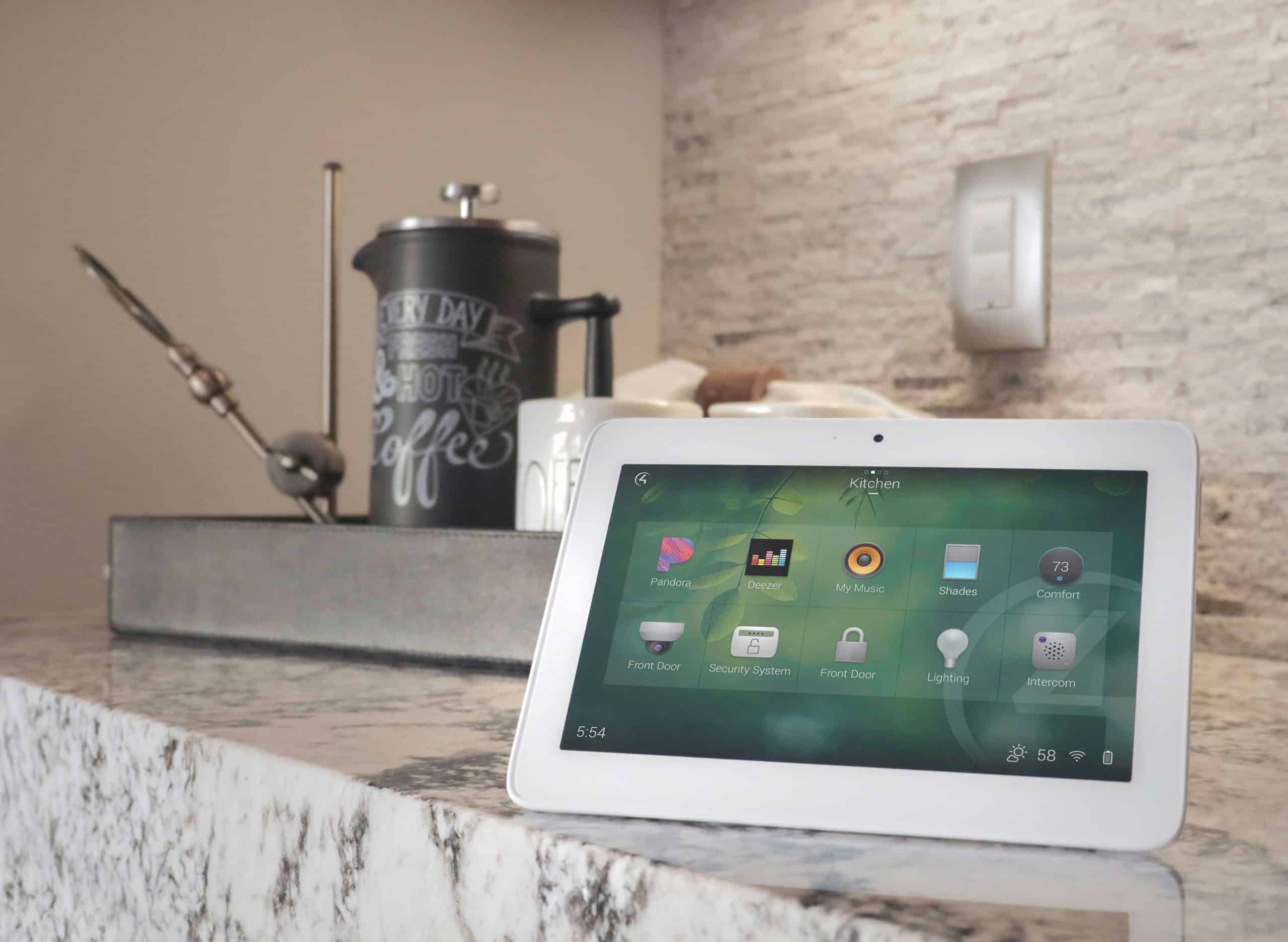
Most homeowners want streaming music, but the experience should not depend on every family member understanding the equipment rack. The control system should make it easy to choose a room, select music, adjust volume, group zones, and turn areas off.
Whole-home audio can integrate with favorite streaming services, local music libraries, TVs, turntables, media servers, theater systems, and automation scenes. A Dinner scene might start jazz in the kitchen and dining room. A Patio Evening scene might activate the outdoor kitchen and landscape speakers. A Goodnight scene should shut down active audio zones.
The control interface can include mobile apps, touchscreens, remotes, keypads, and voice where appropriate. The most elegant systems often combine detailed app control with simple wall keypads for daily actions.
Guide Section
Outdoor Audio for Chicago Homes
Outdoor audio needs a different design approach than indoor audio. Open air has fewer boundaries to reinforce sound, and weather, landscaping, patio layout, pool noise, traffic, and neighbor distance all matter. A single speaker pair mounted under an eave may be loud near the house and weak everywhere else.
A better outdoor design uses distributed coverage. Landscape speakers, subwoofers, patio speakers, and zone grouping can create a natural sound field at comfortable volume levels. The goal is to make the patio, pool, or outdoor kitchen feel like an extension of the home without creating harsh hot spots.
Seasonal use should also be considered. Systems in the Chicago area should be designed with durable outdoor-rated equipment, protected wiring, proper drainage/placement, and service access.
Guide Section
Infrastructure and Maintenance
The cleanest whole-home audio systems are planned with structured wiring, centralized amplification, proper ventilation, labeled cables, and documented zones. New construction and remodels are ideal times to run speaker wire, network cable, conduit, and control wiring.
Maintenance is part of the ownership experience. Streaming platforms update, network hardware changes, mobile apps evolve, and families may add rooms or sources. A well-documented system with remote support options is easier to maintain and expand.
Davis positions whole-home audio as a long-term lifestyle system supported by professional design, clean installation, and service plans.
Examples
Helpful Examples
Morning Routine
Kitchen, breakfast nook, and primary bath play a low-volume news or music source while the rest of the home remains quiet.
Entertaining
Great room, dining room, kitchen, patio, and landscape zones are grouped at balanced levels so guests move naturally through the home.
Outdoor Dinner
Outdoor kitchen and patio speakers play at conversation-friendly volume, while the pool zone can be adjusted separately.
FAQ
Frequently Asked Questions
Can different rooms play different music?
Yes. A properly designed multi-room audio system can allow independent sources and volume control by zone, depending on the equipment and control platform.
Are ceiling speakers good enough for luxury audio?
They can be excellent for many rooms when properly selected and placed. Critical listening rooms, theaters, and design-sensitive spaces may require different speaker types.
Can outdoor audio sound good without being too loud?
Yes. Distributed outdoor speaker design creates more even coverage at lower volume, which usually sounds better and is more neighbor-friendly.
Can whole-home audio connect to my smart home system?
Yes. Audio can be integrated with scenes, keypads, touchscreens, remotes, mobile apps, shades, lighting, and entertainment systems.
Is it better to wire speakers during construction?
Yes. Pre-wiring creates cleaner installation, more flexible zone planning, better reliability, and fewer compromises later.
Plan Your System With Davis Audio & Video
Davis Audio & Video can design whole-home audio that fits your architecture, entertaining style, and daily routines. Schedule a consultation to plan the right zones, speakers, control system, and support strategy.