Samsung OLED
Choose OLED when black level, contrast, shadow detail and a refined cinematic image are primary. Current premium models add glare-management and high-refresh features, with exact capabilities varying by model and size.

Premium display selection and integration
Samsung’s television range spans high-output Neo QLED models, self-emissive OLED displays, lifestyle products such as The Frame, and a wide range of sizes and design treatments. The right choice depends on the room’s light, viewing distance, seating width, content, mounting detail and audio plan—not simply the most expensive panel or the brightest demo mode.
Integrator guidance
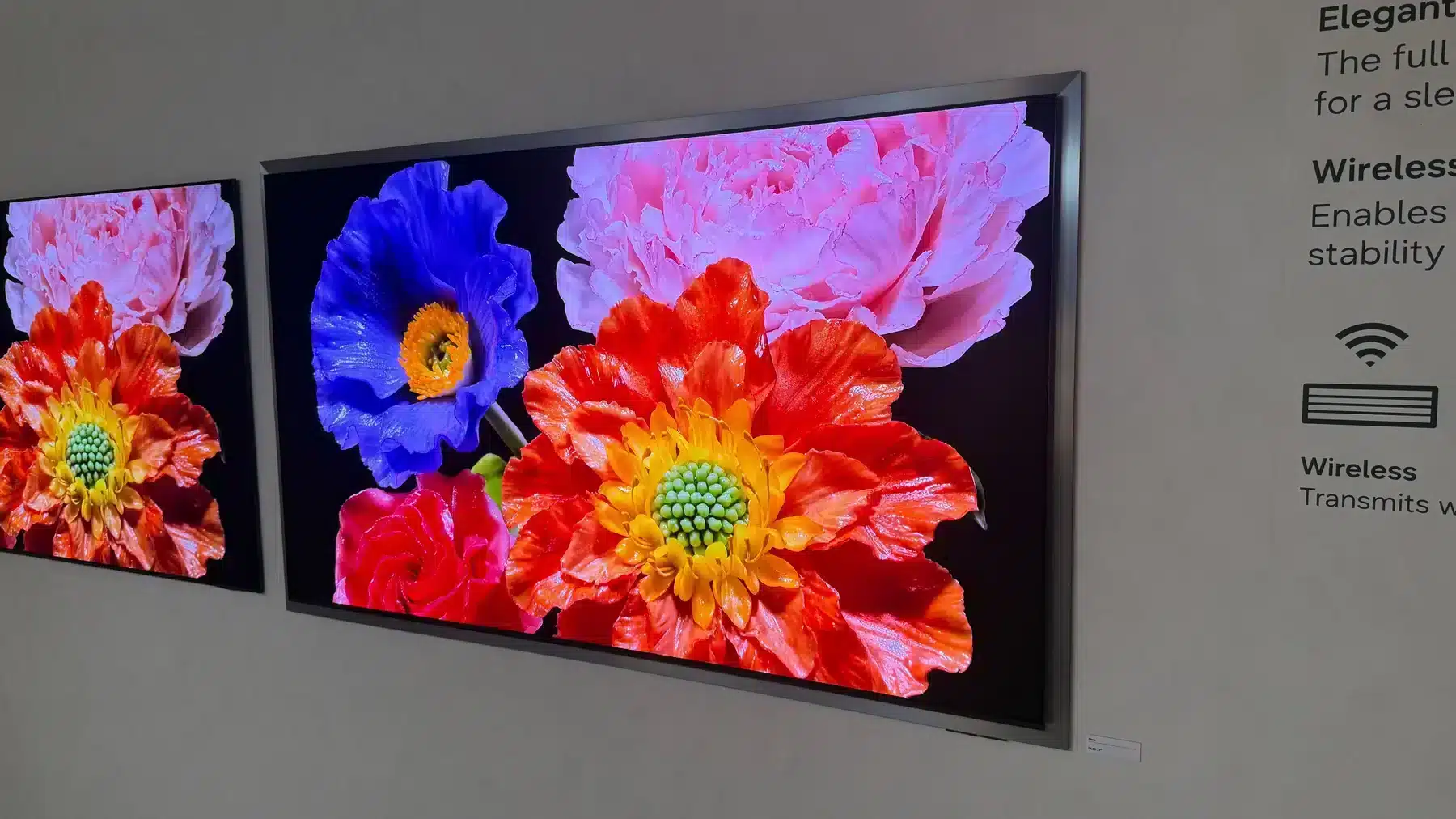
Television specifications are useful only when translated into the room. A glare-resistant OLED may be ideal for a refined multipurpose space. A high-output Neo QLED can be a stronger choice where daylight control is limited. The Frame may be selected because the display must contribute to the interior when it is off. Screen size should be judged against seating and content, not the old rule that the television must fit the furniture opening.
Davis Audio & Video plans the display together with the bracket, wall construction, power location, source equipment, soundbar or surround system, network, control platform and service access. For new construction, those decisions belong in the drawings. For retrofit work, we identify what can be concealed without compromising structure or code compliance.
Samsung’s 2026 OLED family illustrates why model-level verification matters. The S95H, S90H and S85H differ in processing generation, glare treatment, HDR tier, refresh capability, audio system and available sizes. Features can also vary by screen size, region and firmware, so the final proposal should name the exact model—not merely “Samsung OLED.”
Choosing the right Samsung TV family
Choose OLED when black level, contrast, shadow detail and a refined cinematic image are primary. Current premium models add glare-management and high-refresh features, with exact capabilities varying by model and size.
Consider Neo QLED where strong light output, larger screen options or sustained bright-room viewing are important. Local-dimming behavior and viewing angle should be evaluated with the intended content and seating.
Use a lifestyle model when architecture and art presentation are central to the brief. Recessed boxes, slim mounting, cable path and external connection hardware must be planned precisely for the intended effect.
Select around controlled light, seating distance, black level, motion, source quality and audio layout. In larger rooms, projection or a very large direct-view display may deserve comparison.
Use a product rated for the actual environment and temperature range. A standard indoor television should not be treated as an outdoor display simply because it is under an overhang.
What professional display integration improves
We compare light, reflections, seating, content and aesthetics before recommending a technology and size. This prevents a showroom specification from becoming a daily room problem.
Bracket, blocking, recessed power, cable routing, external connection boxes, ventilation and removal clearance are coordinated so the television looks integrated without trapping the electronics.
HDMI bandwidth, eARC, HDR, game settings, CEC and source outputs are tested across the actual chain. Logos on individual components do not guarantee that the system is passing the expected signal.
Control4 or another integrated control path can present activities such as Watch TV, Apple TV, Game and Room Off while coordinating the audio system, lighting and shades.
Professional design
Mounting begins with structure and viewing geometry. We verify wall construction, blocking, bracket load, screen centerline, eye height, furniture, fireplace conditions and service clearance. A very thin display can still require depth for power, HDMI connectors, a soundbar mount or Samsung connection hardware.
The signal chain must match the use case. Gaming may call for high-frame-rate inputs, low-latency modes and compatible cables. A premium soundbar or processor may rely on eARC. Centralized sources may require an AVPro Edge extender or matrix. We label inputs and confirm the television is not silently converting the source to an unintended format.
Picture setup is the final layer. We disable inappropriate showroom behavior, select useful day and evening starting modes, check motion and energy settings, verify HDR activation and tune the connected source. Formal instrument calibration may be specified where the room and client goals justify it.
How Samsung TVs fit into a Davis Audio & Video system
The soundbar connects to the television’s correct HDMI eARC/ARC port. We verify pass-through formats, CEC volume control, lip sync, mounting clearance and source behavior.
The remote can launch sources, control volume, access common TV functions and coordinate lighting or shades. IP, IR and HDMI-CEC roles are selected for reliability rather than left to compete.
Remote racks and centralized sources can feed the display over a tested category or fiber pathway. The extender model is chosen for the exact signal, distance and eARC requirement.
A Samsung display can be paired with a soundbar, stereo speakers or a complete surround system. Speaker and screen locations are coordinated so neither compromises the other.
Specifications
Representative U.S. manufacturer information reviewed July 2026. Samsung features, model numbers, panel details, refresh rates, connections and availability can vary by screen size, region and firmware. Verify the exact SKU before proposal and rough-in.
| U.S. sizes | 55, 65, 77 and 83 inches |
|---|---|
| Processor | NQ4 AI Gen3 Processor |
| Reflection treatment | Glare Free |
| HDR tier | OLED HDR Pro |
| Refresh capability | Up to 165 Hz on supported inputs / content |
| Audio | Object Tracking Sound+ |
| Design | FloatLayer design |
| Lifestyle feature | Samsung Art Store support |
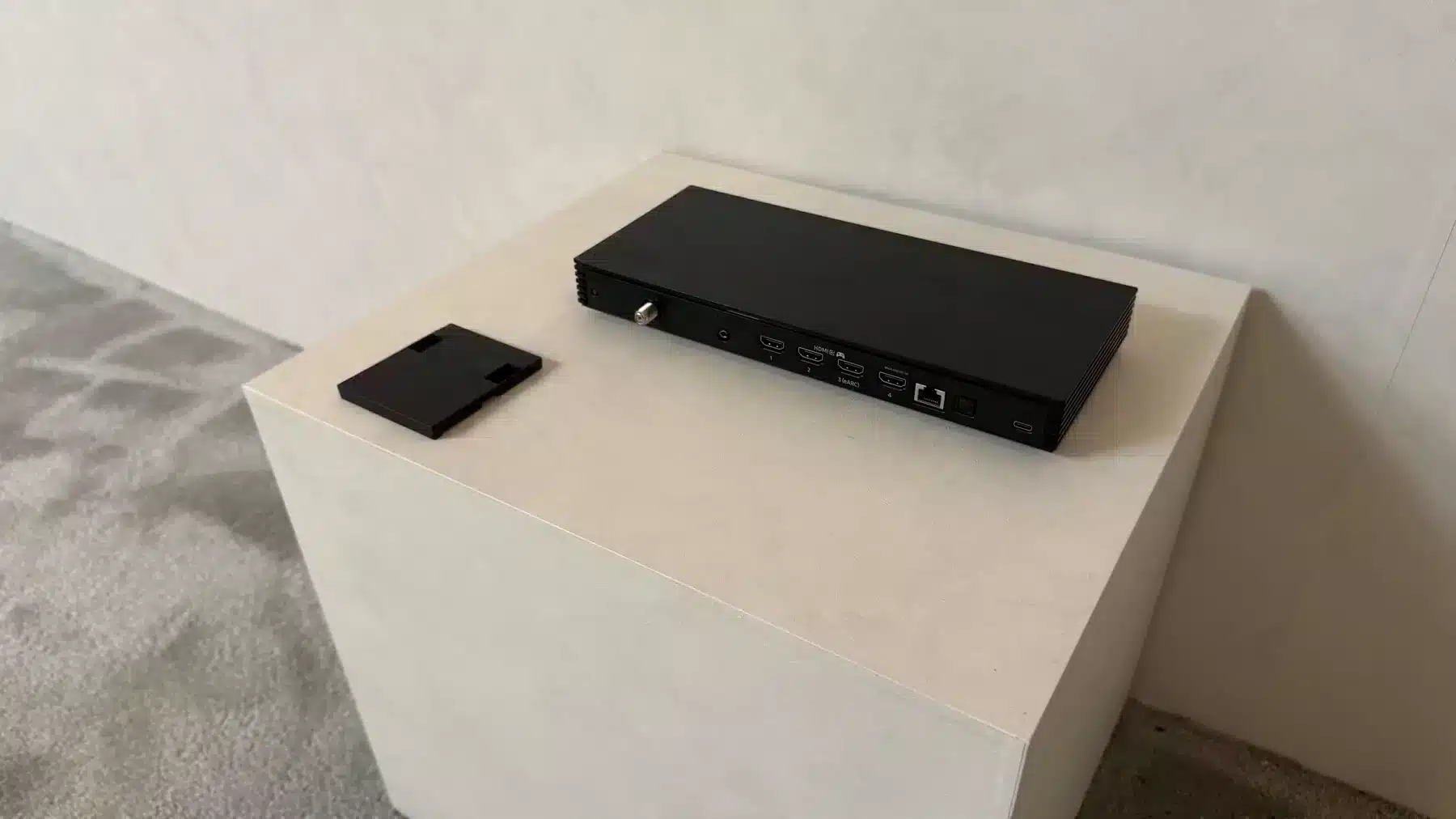
| Optional connection approach | Wireless One Connect accessory available separately for supported configurations; Samsung states up to 30 ft under supported conditions |
| U.S. sizes | 42, 48, 55, 65, 77 and 83 inches |
|---|---|
| Processor | NQ4 AI Gen3 Processor |
| Reflection treatment | Glare Free |
| HDR tier | OLED HDR+ on larger models; 42- and 48-inch versions use model-specific OLED HDR positioning |
| Refresh capability | Up to 165 Hz on supported model sizes / inputs; verify exact SKU |
| Audio | Object Tracking Sound Lite |
| Design | LaserSlim |
| U.S. sizes | 48, 55, 65, 77 and 83 inches |
|---|---|
| Processor | NQ4 AI Gen2 Processor |
| Reflection treatment | No S95H / S90H Glare Free claim; evaluate room reflections directly |
| HDR tier | OLED HDR |
| Refresh capability | Up to 120 Hz on supported inputs / content |
| Audio | Object Tracking Sound Lite |
| Design | Contour design; 48-inch model uses model-specific slim design |
Planning notes
Davis Audio & Video process
We start with how the room is used, what needs to be simple, which equipment is staying, and where future expansion is likely. For new construction or remodeling, we coordinate before walls close.
We match the product to the room, speaker load, network, display, control platform, wiring path, and aesthetic requirements. The goal is a complete operating system—not a collection of unrelated boxes.
Mounting, wiring, rack placement, ventilation, labeling, surge protection, and network connections are completed with serviceability in mind. Concealed work is documented whenever practical.
We configure the everyday experience, verify signal paths, tune audio or picture settings, test control from the primary interfaces, and check the edge cases that usually create support calls later.
We explain the few controls that matter, leave the system in a predictable state, and provide a support path. Davis Audio & Video’s standard is simple: if the system is difficult to use, the project is not finished.
FAQs
A high-output Neo QLED is often a strong candidate, and selected premium OLED models add effective glare-management features. The choice should be made from actual room light, window position, viewing angle and preferred content rather than a technology label alone.
OLED pixels create their own light, which supports very deep black and precise contrast. Neo QLED uses an LCD panel with Mini LED backlighting and local dimming, often favoring high light output and broad size choices. Each has strengths that should be matched to the room.
Samsung positions the S95H as its premium 2026 OLED, with NQ4 AI Gen3 processing, Glare Free treatment, OLED HDR Pro, up-to-165 Hz support, Object Tracking Sound+, FloatLayer styling and an optional Wireless One Connect approach for supported installations.
Screen size should reflect viewing distance, seating width, content resolution and the desired sense of immersion. Many clients are comfortable with a larger image than traditional furniture-based rules suggest, but the wall and room proportions still matter.
In many rooms, yes, using code-compliant power, in-wall low-voltage pathways, recessed hardware or a remote equipment location. Wall construction, fireplaces, masonry and service access determine what can be concealed safely.
Yes. Arc Ultra connects through the television’s HDMI eARC/ARC port. Davis Audio & Video verifies the correct port, audio output and pass-through settings, CEC volume control, lip sync and the source formats delivered to the soundbar.
Compatible Samsung models can be integrated through supported Control4 drivers and control methods. The project is programmed around activities so the client selects what to watch rather than managing TV inputs and audio devices separately.
For supported models and configurations, Samsung’s optional Wireless One Connect approach moves source connections away from the display and transmits video wirelessly. It still requires power and a planned environment, and the manufacturer’s stated range is conditional on placement and interference.
Every installation benefits from correct basic setup. Formal instrument calibration is valuable when color accuracy, controlled lighting and reference movie viewing justify it. The final recommendation depends on the room, model and client expectations.
A standard indoor television is not designed for outdoor moisture, temperature and sunlight. Use a display and mounting system rated for the actual environment, with appropriate power, weather protection and seasonal service considerations.
Related Davis Audio & Video resources
Next step
Davis Audio & Video can help match products to wiring, control, acoustics, networking, mounting, calibration and long-term support.