Coves and ceiling details
Create indirect ambient light that emphasizes architecture and reduces visible glare when the setback and surface are designed correctly.

Architectural LED layers, tunable white, and color
Control4 Vibrant Linear Lighting turns coves, shelves, millwork, stairs, toe kicks, niches, and architectural details into controlled layers of light. The system combines LED tape, aluminum extrusions, diffusers, drivers, and supported control protocols so brightness, white temperature, and color can participate in the same Control4 scenes as the rest of the home.
Integrator guidance
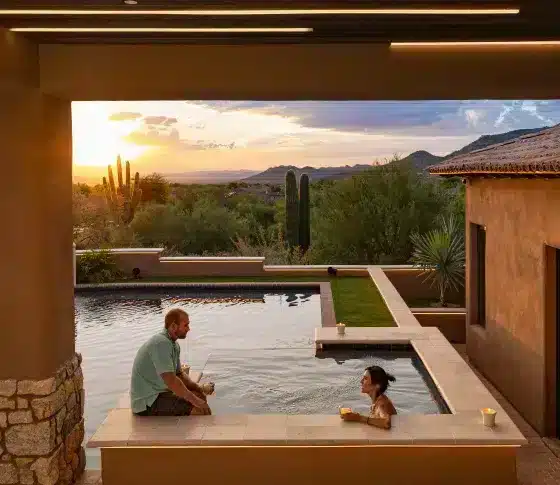
Linear lighting is not a substitute for a complete lighting plan. It is a powerful layer that can reveal texture, float cabinetry, illuminate work surfaces, provide low-level pathways, or wash a ceiling without a visible fixture. The result depends on where the source is concealed, how the extrusion controls glare, the distance to the illuminated surface, the reflectance of materials, and whether the LED tape can be serviced after construction.
Vibrant includes high-CRI tape options in fixed white temperatures, diffusing and warm-dimming formats, tunable white, RGBW or RGBTW, and selected outdoor configurations. Aluminum channels and lenses protect the tape, manage heat, and shape the appearance. Control can use phase dimming, DMX, DALI, or a Zigbee module depending on the selected product and system architecture.
The Daylight feature can vary brightness and color temperature of tunable-white lighting through the day, beginning warm and dim, becoming brighter and cooler, then returning warmer toward evening. Davis Audio & Video treats that as a designed schedule, not a medical claim, and coordinates it with daylight, room use, client preference, and Lutron or Control4 shade behavior.
Architectural applications for linear lighting
Create indirect ambient light that emphasizes architecture and reduces visible glare when the setback and surface are designed correctly.
Illuminate countertops, display shelves, bars, closets, and millwork with continuous light, serviceable channels, and appropriate diffuser selection.
Provide low-level guidance that can respond to time or occupancy without turning on harsh overhead lighting.
Add low-glare accent, step, or bias lighting coordinated with viewing scenes and screen performance.
Use products specifically rated for the location to illuminate steps, eaves, kitchens, rails, and details while addressing water, UV, temperature, and corrosion.
Vibrant system capabilities
90+ CRI options help render finishes and objects more naturally than low-quality commodity LED tape.
Select products can shift white temperature as they dim or allow independent color-temperature control.
RGBW and RGBTW options can provide saturated or nuanced color for entertainment and accent applications without making every room look theatrical.
Daylight can automate supported tunable-white brightness and temperature across a designed daily curve.
Phase, DMX, DALI, and Zigbee options allow the lighting layer to fit different load sizes, distances, color functions, and project architectures.
Professional design
Davis Audio & Video recommends testing the actual extrusion, lens, tape, distance, finish, and dimming behavior before repeating a detail throughout expensive millwork.
Tape wattage, run length, feed location, wire gauge, driver loading, channel thermal capacity, and voltage drop are calculated rather than estimated.
Drivers, decoders, power supplies, and control modules require ventilation and access. They should not be permanently buried behind finished surfaces.
Simple fixed-white dimming, long runs, tunable white, and multi-channel color have different control requirements. The protocol is selected after the lighting effect is defined.
Mitered corners, diffuser seams, reveals, mounting clips, reflective surfaces, LED dotting, and drywall or millwork dimensions affect the final appearance.
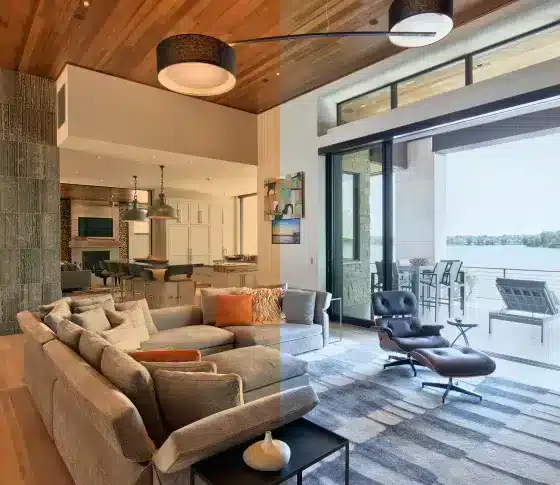
Layering Vibrant with the smart home
Keypads and scenes can coordinate linear layers with downlights, decorative fixtures, landscape lighting, and room-off commands.
Tunable and electric light can respond with natural light so the room maintains the intended brightness and privacy.
Movie, Music, Entertain, and Game scenes can use restrained accent color or low-level pathways while protecting screen contrast.
Time- and occupancy-conditioned pathway lighting can improve navigation without flooding the home with full output.
Specifications
| Color quality | 90+ CRI LED tape options |
|---|---|
| Extrusions | Aluminum profiles and diffusers, including slim 12 mm-wide options |
| Fixed white | Representative 2700 K, 3000 K, and 4000 K options |
| Dynamic white | Warm-dimming and tunable-white products |
| Color | RGBW and RGBTW product options |
| Outdoor | Selected fixed-white and RGBW products for appropriate exterior applications |
| Control | Model-dependent phase dimming, DMX, DALI, and Control4 Zigbee module |
| Automation | Brightness, color, color temperature, scenes, schedules, and Daylight on supported configurations |
| Electrical | Tape watts per foot, total load, driver derating, circuit capacity, voltage, and inrush |
|---|---|
| Run | Maximum run length, feed points, voltage drop, wire gauge, and connector loss |
| Optical | Lumens, color temperature, CRI, beam/lens, setback, dot-free distance, and reflected surface |
| Mechanical | Extrusion size, recess, corner detail, lens access, heat dissipation, and mounting |
| Control | Channel count, protocol, address, decoder, dimming curve, scene levels, and fail state |
Davis Audio & Video process
Davis Audio & Video starts with the room, the household, and the result the client expects—not with a product list. We document existing equipment, construction conditions, wiring access, network health, aesthetic priorities, security requirements, and the controls people already understand.
We select the correct Control4 or Lutron architecture, verify electrical and low-voltage requirements, coordinate with architects, designers, builders, electricians, HVAC professionals, and window-treatment workrooms, and produce a system plan that can be installed and serviced without guesswork.
Devices are mounted, wired, labeled, updated, and programmed as one operating system. Scenes, schedules, room-off behavior, notifications, user permissions, and remote interfaces are tested from the controls the family will actually use.
We verify normal operation, failure recovery, network communication, audio or video performance, and safety-related behavior. The homeowner receives a clear walkthrough focused on everyday actions. Davis Audio & Video considers the project unfinished if the system is powerful but difficult to operate.
The final configuration is documented so future service, additions, or renovations can be completed efficiently. Davis Audio & Video can support software updates, programming changes, seasonal adjustments, and expansion as the home evolves.
FAQs
It is a continuous or near-continuous LED light source installed in a channel or architectural detail. It can provide indirect ambient light, task light, accent light, or pathways.
Warm-dim products automatically become warmer as output is reduced, similar to incandescent behavior. Tunable-white products allow brightness and color temperature to be controlled more independently.
RGBW combines red, green, blue, and a white channel. RGBTW adds tunable-white channels for a broader range of saturated color and higher-quality white light. Control and wiring are more complex than fixed white.
Color Rendering Index is one measure of how naturally a light source renders colors compared with a reference. A 90+ rating is generally desirable for residential interiors, although spectral quality involves more than one number.
It can appear continuous when tape density, diffuser, channel depth, surface, and viewing angle are correctly matched. A mockup is the safest way to judge a critical detail.
It is a schedule for supported tunable-white lighting that changes brightness and color temperature across the day to resemble the natural cycle of daylight.
Selected products are intended for appropriate outdoor applications. The exact tape, channel, driver, connectors, enclosure, drainage, temperature, and control location must all meet the environment.
In ventilated, accessible locations within allowed wire-distance and voltage-drop limits. Davis Audio & Video coordinates driver panels, closets, cabinets, or service spaces before construction.
Integration is project-specific. Vibrant supports several control methods, and Control4 can coordinate scenes with Lutron systems. The chosen dimming or color protocol must be engineered across both platforms.
Cost depends on tape type, length, channel, lens, drivers, control protocol, wiring, millwork detail, access, and installation labor. A short fixed-white shelf is very different from a whole-home tunable-white system.
Related Davis Audio & Video resources
Next step
Davis Audio & Video can help match products to wiring, control, acoustics, networking, mounting, calibration and long-term support.