
Architectural, invisible and landscape audio

Sonance Speakers for In-Ceiling, Invisible and Outdoor Audio

Sonance builds speakers around architecture rather than asking architecture to work around the speaker. Its residential families range from discreet round and rectangular in-ceiling models to fully concealed speakers finished behind the wall, shallow solutions for tight framing, and landscape systems designed to distribute sound across an outdoor property.

Indoor families Visual Experience, Thin-Line, Invisible Series
Outdoor families Landscape satellites and buried subwoofers
Design strength Consistent coverage with restrained visual impact
Selection basis Room, finish, depth, output and amplifier strategy

Integrator guidance

Sonance Speakers in a complete Davis system.

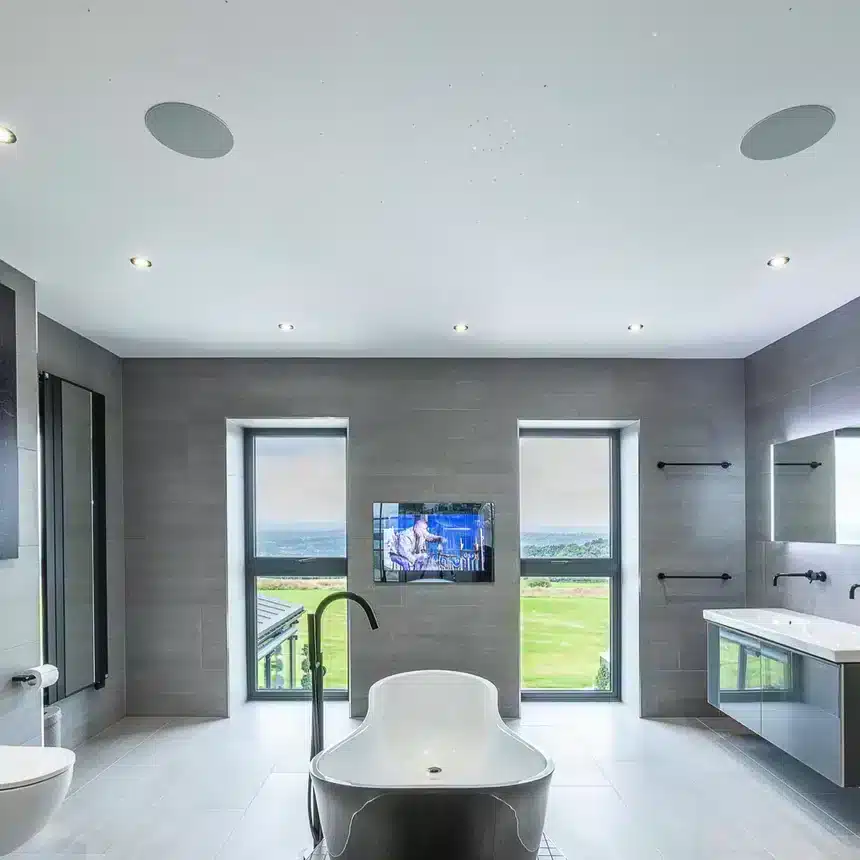
Modern interior featuring discreet Sonance architectural speakers

“In-ceiling speaker” is not a complete specification. Two speakers with the same visible grille size can differ substantially in dispersion, bass extension, mounting depth, power handling and tonal character. Invisible speakers add another layer: wall material, finish thickness and trade coordination become part of the acoustic system. Outdoor audio adds weather exposure, property coverage, burial, drainage and transformer tap settings.

Davis Audio & Video begins with the listening area and the desired visual result. We then select the Sonance family, performance level, layout, amplification and installation method. That process prevents the two most common compromises: too few speakers playing too loudly, or too many products chosen without a coherent coverage plan.

Sonance also pairs naturally with Sonos Amp and professionally managed control systems. The speakers can disappear into the architecture while music remains accessible from familiar apps, remotes and scenes.

Choosing the right Sonance family

The best family is driven by the room and construction—not by a single “best speaker” ranking.

Visual Experience (VX)

A broad architectural line with round, square and rectangular options, multiple driver sizes and performance levels. VX is a strong starting point for whole-home music and media rooms where a grille is acceptable but sound should remain evenly distributed.
Visual Experience Thin-Line

Designed for restricted cavities such as 2.5-inch metal framing and other shallow conditions. Thin-Line can solve a construction problem, but available depth, bracket choice and back volume still need to be confirmed before walls close.

Invisible Series

Installed into the wall or ceiling and covered with approved finish materials so the speaker disappears. The design is ideal for highly refined interiors, but performance depends on exact installation and finish execution.

Sonance Landscape Series

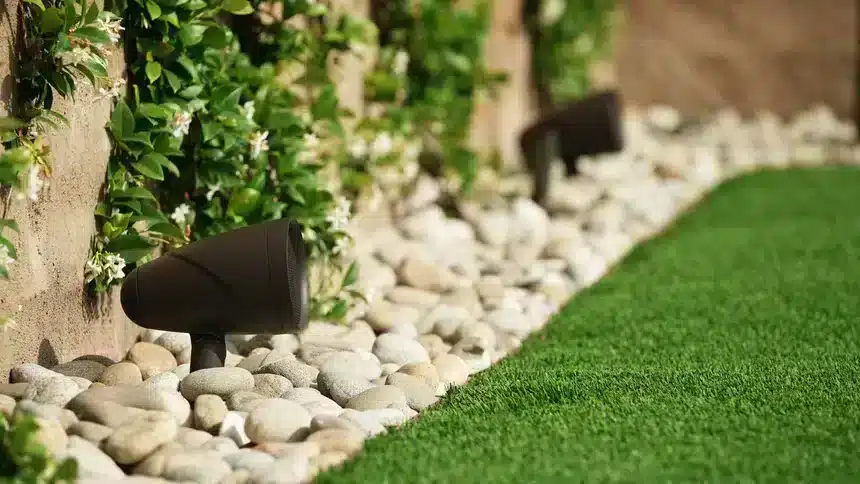
Satellite speakers and buried subwoofers distribute sound through plantings and hardscape. The approach produces more even coverage at lower local volume than trying to cover an entire property from the house.

SGS systems

Preconfigured landscape packages such as SGS 8.1 provide a starting quantity of satellites and an in-ground subwoofer. Final coverage still depends on site geometry, grade, foliage, neighboring properties and desired listening level.

Why designers and homeowners choose Sonance

The speaker can follow the interior design

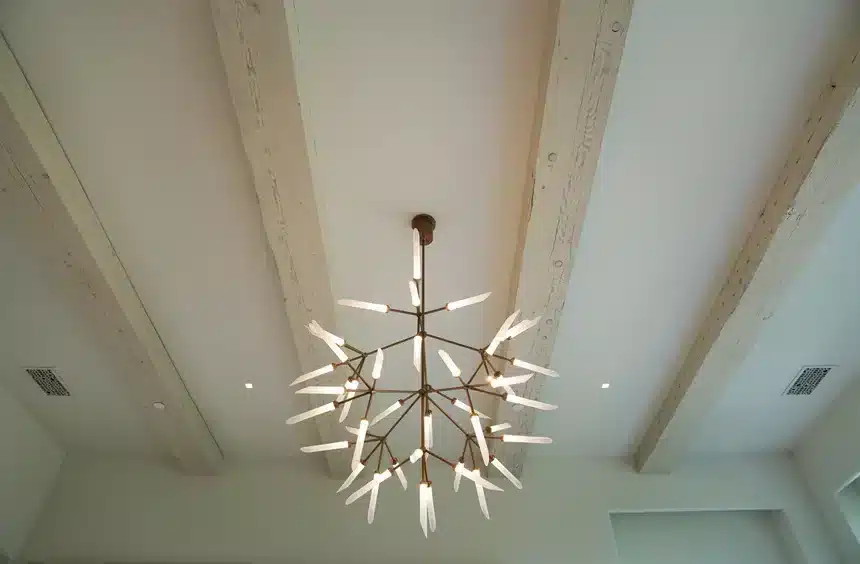
Grille style, trim approach, shape and finish can be coordinated with lighting and ceiling geometry. Invisible models go further by allowing the final surface to continue over the speaker within approved finish requirements.

Coverage can be engineered, not guessed

Sonance uses waveguides, crossover design and product families with different sizes and performance levels. We use that information with ceiling height, seating, room volume and speaker spacing to create consistent listening.

Indoor and outdoor systems can share one control experience

A Sonance system can be powered by Sonos Amp or other appropriate amplification and controlled as part of whole-home audio. The visible interface remains simple even when the installation behind it is sophisticated.

There is a solution for difficult construction

Shallow cavities, high-finish interiors, exterior landscapes and large open plans each call for different mechanical and acoustic solutions. Sonance offers enough breadth to solve the actual condition rather than forcing one speaker everywhere.

Professional design

The installation is part of the speaker

Architectural audio performance depends on placement and construction. Joists, ducts, sprinkler lines, recessed lighting and cabinetry can move a speaker from its ideal position. Back cans or acoustic enclosures may be needed for sound containment, fire-rating strategy or consistent loading. Grilles should align with the architecture without placing every speaker at a room edge where coverage suffers.

Invisible speakers require a disciplined sequence. Framing depth and flatness are confirmed, wiring is tested, the panel is secured, protective procedures are followed, and the approved finish is applied within the manufacturer’s limits. The speaker should be documented before it disappears. A finish trade cannot be asked to “make it invisible” without understanding that finish thickness changes output.

Landscape systems require equal care. Speaker aim, transformer taps, cable type, waterproof splices, burial depth, drainage and subwoofer location all affect reliability. We distribute sound toward the listening areas and away from neighbors whenever the property allows.

Representative Sonance applications

Whole-home music

VX in-ceiling or in-wall speakers paired with properly sized amplification for kitchens, family rooms, offices and bedrooms.

High-design interiors

Invisible Series or precision trimless solutions coordinated with the architect, lighting plan, drywall and finish contractor.

Media and theater rooms

Architectural front, surround and height channels selected for output, dispersion and seating geometry rather than grille size alone.

Outdoor living

Landscape satellites and buried subwoofers placed around terraces, pools, gardens and entertaining areas for even coverage.

Specifications

Representative Sonance specifications

Sonance is a broad speaker portfolio. The tables below show representative current models and families—not a substitute for a room-specific design or the final project submittal.

Visual Experience VX66R — representative in-ceiling model

SKU 96014 (Brilliant White / Satin)
Configuration 6.5-inch round in-ceiling speaker
Tweeter 1-inch ceramic dome, ferrofluid-cooled, acoustic back chamber
Woofer 6.5-inch Kevlar / Nomex cone, rubber surround, pivoting
Frequency response 43 Hz–20 kHz (±3 dB)
Power handling 5–140 watts RMS
Sensitivity 90 dB (2.83 V / 1 m)
Cutout diameter 8.25 inches
Mounting depth 4.92 inches
Finish options Micro Trim, trimless and selected TRUFIG approaches; grille services vary

Invisible Series — representative model data

IS6 50 Hz–30 kHz; 84 dB; 16.1 × 16.1 × 3.15 inches
IS8 40 Hz–30 kHz; 86 dB; 16.1 × 24.13 × 3.15 inches
IS10 35 Hz–30 kHz; 87 dB; 16.1 × 28.66 × 3.15 inches
Nominal system options 6-ohm and selected 70 V / 100 V configurations by model
Coverage concept Approximately 180-degree dispersion, model and installation dependent
Approved finishes Selected drywall compound, plaster, wallpaper, wood veneer, leather and other materials within manufacturer requirements

Outdoor reference points

Landscape satellite taps Selected models provide 40 W / 60 W transformer tap options
In-ground subwoofer reference Selected Landscape systems use a 300 W-rated buried subwoofer
Environmental rating Selected Landscape products are rated IP66
SGS 8.1 package Eight satellite speakers plus one in-ground subwoofer
Manufacturer coverage reference Up to approximately 3,500 square feet depending on layout and conditions
Expansion Selected SGS designs can expand to 16.2 configurations

Planning notes

Sonance design and construction notes

  • Speaker centers, joist conflicts, enclosure needs, finish details and wiring paths are far easier to solve before the ceiling is closed.
  • Frequency response and sensitivity do not describe a room by themselves. Quantity, spacing, boundary conditions, amplifier headroom and listening distance remain essential.
  • The final finish is an acoustic layer. Approved material and maximum thickness must be communicated to the finish contractor and verified before handoff.
  • More distributed speakers at sensible levels usually create better listening near the seating area and less spill beyond the property than a few speakers driven aggressively.

Davis process

From product decision to a system that is simple to live with.

  1. 01

    Consultation and room review

    We start with how the room is used, what needs to be simple, which equipment is staying, and where future expansion is likely. For new construction or remodeling, we coordinate before walls close.

  2. 02

    System design and product selection

    We match the product to the room, speaker load, network, display, control platform, wiring path, and aesthetic requirements. The goal is a complete operating system—not a collection of unrelated boxes.

  3. 03

    Clean installation

    Mounting, wiring, rack placement, ventilation, labeling, surge protection, and network connections are completed with serviceability in mind. Concealed work is documented whenever practical.

  4. 04

    Programming, calibration, and testing

    We configure the everyday experience, verify signal paths, tune audio or picture settings, test control from the primary interfaces, and check the edge cases that usually create support calls later.

  5. 05

    Client handoff and support

    We explain the few controls that matter, leave the system in a predictable state, and provide a support path. Davis Audio & Video’s standard is simple: if the system is difficult to use, the project is not finished.

FAQs

Product questions

Are Sonance speakers good for whole-home audio?

Yes. Sonance offers multiple architectural families designed for distributed audio, from discreet in-ceiling models to invisible speakers. The system quality depends on matching the model, quantity, placement and amplifier to each room rather than using one speaker specification everywhere.

What is the difference between Sonance VX and Invisible Series?

Visual Experience speakers use a visible but discreet grille and offer many sizes, shapes and performance levels. Invisible Series speakers are installed behind an approved wall or ceiling finish. Invisible installation requires tighter construction and finish coordination.

Can Sonance invisible speakers really be hidden?

Yes, when installed and finished within Sonance requirements. The panel sits in the wall or ceiling and approved finish material continues over it. The location should be documented, and finish thickness must be controlled because the finish affects acoustic output.

Can Sonance speakers work with Sonos Amp?

Yes. Sonos markets Sonos Architectural by Sonance products specifically for Amp, and many other passive Sonance models can also be used with appropriately matched amplification. Trueplay through Amp is limited to supported Sonos Architectural by Sonance models.

What are Sonance Thin-Line speakers for?

Thin-Line models address shallow wall or ceiling cavities, including construction based on approximately 2.5-inch metal framing. Exact mounting depth and bracket requirements vary, so the selected model should be verified against the actual cavity.

How many outdoor speakers do I need?

That depends on the property shape, listening areas, ambient noise, desired level and neighbor exposure. We normally favor distributed coverage with multiple satellites and one or more subwoofers rather than trying to project sound from the house across the entire yard.

Are Sonance outdoor speakers weather resistant?

Selected Sonance Landscape products carry IP66 ratings and are designed for outdoor use. Reliability still depends on correct cable, waterproof connections, burial, drainage, physical protection and seasonal site conditions.

Can in-ceiling speakers be used for a home theater?

Yes, but every channel should be chosen and placed for its role. In-ceiling speakers are often appropriate for height channels and can support other positions in design-constrained rooms. A dedicated theater may benefit from in-wall front channels and a more controlled speaker layout.

Can Sonance grilles be painted?

Many Sonance architectural grilles are paintable, and selected grille printing or finish services are available. Paint must be applied without blocking perforations or changing the intended fit. We coordinate that step with the finish plan.

Does Davis provide a speaker layout before installation?

Yes. For an appropriate project, the design package identifies speaker type, approximate locations, zones, amplifier strategy and relevant construction notes. Final locations are field-verified against framing, mechanical systems and architectural conditions.

Related Davis resources

Plan the connected pieces around this product.

Next step

Bring the product decision into the full room and system plan.

Davis Audio & Video can help match products to wiring, control, acoustics, networking, mounting, calibration and long-term support.

Editorial review and source notes

Manufacturer and editorial source material was reviewed for this guide. Exact specifications, firmware behavior and model availability can change, so Davis confirms project details during design.